
TI - TIE Pilot
Jolly Roger Squadron : jrsdetachment501st.org
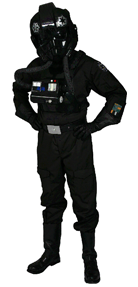 For help with this costume, please contact: TI-3844
A TIE Pilot costume MUST have:
Helmet
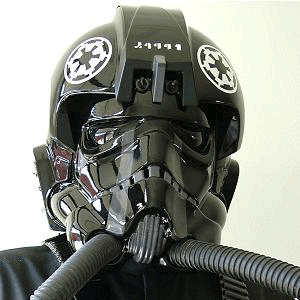
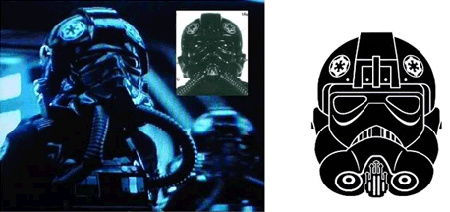
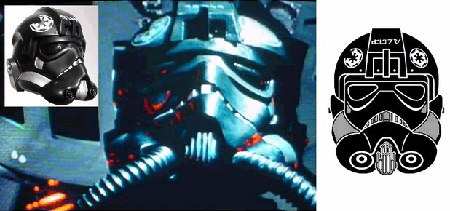
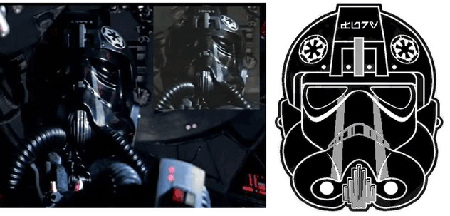
A licensed (i.e. Don Post, Rubies, etc) or fan-made helmet, as seen in the films. This helmet was based on the U.S.A.F. APH-6 series flight helmet. The helmet may have green or grey lenses (flat or bubbled). It should have a silver (aluminum) greeblie / disc over each ear cap. The top front of the helmet must have a 2.75" diameter Imperial cog in either white or silver on each side of the center ridge. From the recesses on each side of the frown a 1.25" black ribbed hose must be mounted and extended down to the chest box (approx. 18" to 21" in length).
Neckseal
A black balaclava or stormtrooper-style neck seal must be worn so that no hair or skin is showing.
Flightsuit
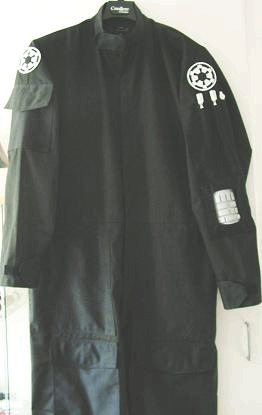
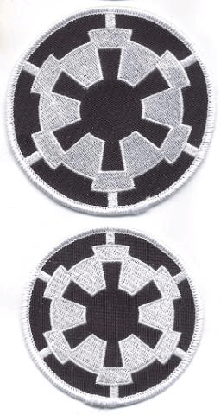
The flightsuit should be made to resemble the ones worn in the films. Modified coveralls are best. Military flight suits can be worn as long as the collar can be closed and thigh and com-pad pockets can be added. The suit must have a white on black imperial cog on each shoulder, approx. 1" from the top of the shoulder seam. This emblem should either be an iron on sticker (printed sticker) or an embroidered patch. For 181st and Baron Fel versions, a 1" red stripe running from the top of the shoulder to the wrist, and from under the arm to the ankle must be added.
Armour
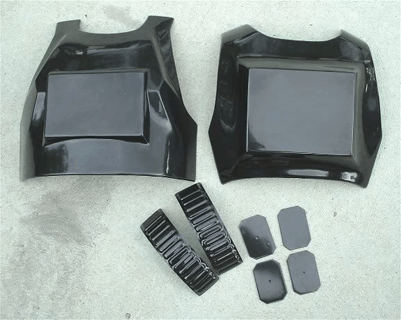
Black ABS (or similar) front and back chest armor, connected by ABS (or similar) shoulder straps that are anchored by a hexagonal plastic or metal plate/fastener on each end. For 181st and Baron Fel versions, a grey ribbed x-wing style flak vest is substituted for armor, and a 1.5" grey nylon flight harness (x-wing and AT-AT style) is required
Chest box
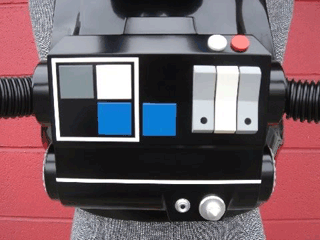
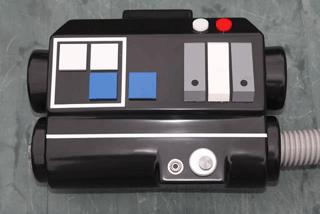
A black plastic box resembling the one in the films must be attached to the centre of the chest armour. The hoses from the helmet plug into each side of the box. Below this connection is a silver gear mounted on a doughnut. On Return of the Jedi versions, the left gear is replaced by a grey hose that goes under the left arm and connects to the belt. The front of the box has a configuration of 1" colored Plexiglas squares. These are generally either 2 white / 2 blue, 1 red / 1 white / 2 blue, or 1 grey / 1 white / 2 blue. The rocker switches, however, are always grey / white / grey, with dots or lamps in the bottom half of the grey ones. Over these rocker switches is a pair of .5" diameter plexi discs; one red, one white. Below the rockers is a pair silver/aluminum discs. One resembles a snap or phono plug, the other a larger disc or knurled knob. For 181st and Baron Fel versions, a “Type B" box is allowed, with different features and configurations. The Return of the Jedi third hose is required for all 181st and Baron Fel versions.
Gloves
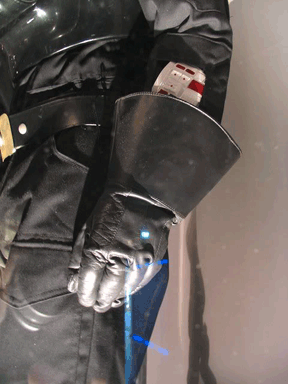
Black leather or leather-like enclosed fingered, non-textured gauntlet style gloves with no extraneous buckles, straps, zippers, or decorative stitching.
Belt
The belt should be constructed from a non-textured, black leather or a leather-like material, approximately 2" (50.8mm) in width. To the right of the buckle, a single large snap or rivet about .5" (12.7mm) should be visible about 1" (25.4 mm) from the buckle.
Buckle
The buckle should be constructed from a horizontally brushed silver metal or metal-looking material and should be approximately 2 5/8" (66.7 mm) high and 4 1/8" (104.5 mm) wide with 0.5" (12.7 mm) radius rounded corners. Canon buckles are slightly curved (contoured to the body). The buckle must bear an Imperial disc in the centre.
Boots
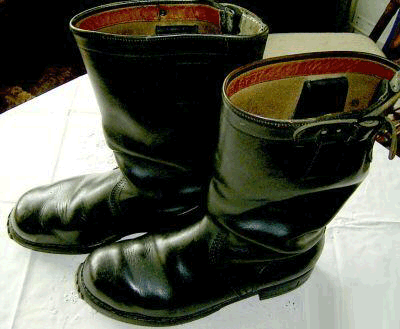
Lace-less calf to knee height boots of black leather or leather like material with a conservative heel and bearing no extraneous buckles, straps, zippers, or decorative stitching. German "jack boot" style boots are best.
A TIE Pilot costume SHOULD have:
Compad
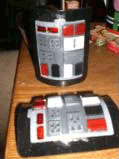
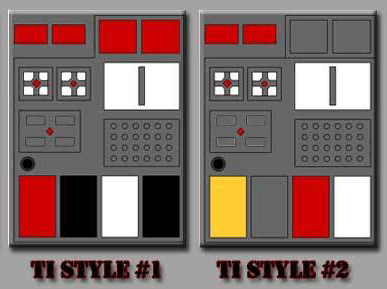
A 5” (127mm) by 5.75” (146mm) flexible rubber or plastic communications pad with a black background and colored details. The compad goes in the compad pocket on the left forearm.
Code cylinders
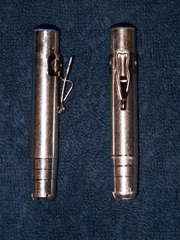
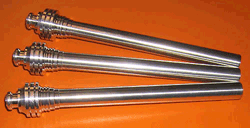
Two silver / aluminum code cylinders located in the top left shoulder pocket.
A TIE Pilot costume MAY have:
Weapon
E-11, DL-44, DH-17, or Merr Sonn "Power 5".
Holster
A black leather or leather-like holster constructed to fit the side-arm chosen.
Armour
Black nylon webbing or elastic may be used between the armor plates (front to back under the arms) to aid in achieving a proper fit.
Helmet
Silver / gun metal accents (traps, tears, teeth, chin, etc) painted on helmet. One quarter of the right hand cog may be cut out, resembling a triangle. A TI # or aurebesh letters may be painted on front edge of "mowhawk".
Flightsuit
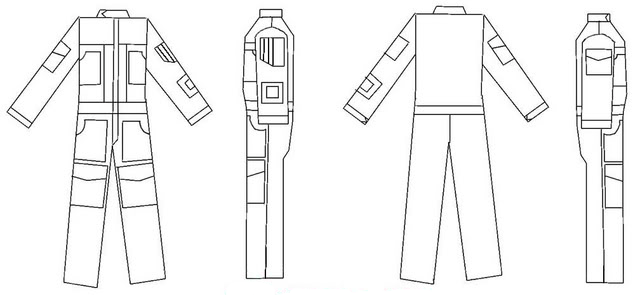
The flightsuit should have as many of the following elements as possible. The suit has a horizontal seam running across the chest from one arm to the other. On the top of the left forearm there is a com-pad pocket about 5" (127mm) wide by 5.75" (146mm) tall with no flap and a 2.25" (57mm) open window in it (size may vary to match your com-pad). On the left bicep about 2" below the "cog" patch there is a code cylinder pocket roughly 5.625 (143mm) square with no flap. It has vertical stitching dividing it into pen sleeves. The bottom front corner of the pocket is cut off at a bevel. The right sleeve has a cargo pocket about 6.125" (156mm) wide and 5.75" (146mm) high, located on the bicep 2" below the cog emblem. The pocket has a 2" square flap. There is a pair of large rectangular chest pockets that run from the nipple to just above the waist, and back to nearly the side seam. The opening is diagonal, along the armpit. There is also a pair of large rectangular waist pockets that run from just below the waist to crotch level, and back to nearly the side seam. The opening is diagonal, similar to the chest pockets. And there is a pair of similarly sized leg thigh pockets directly under the waist pockets with, top opening with a 3” flap. All pockets are external. All pocket flaps should be pointed to form a chevron shape. There should be expansion pleats sewn in to the seam behind the shoulder.